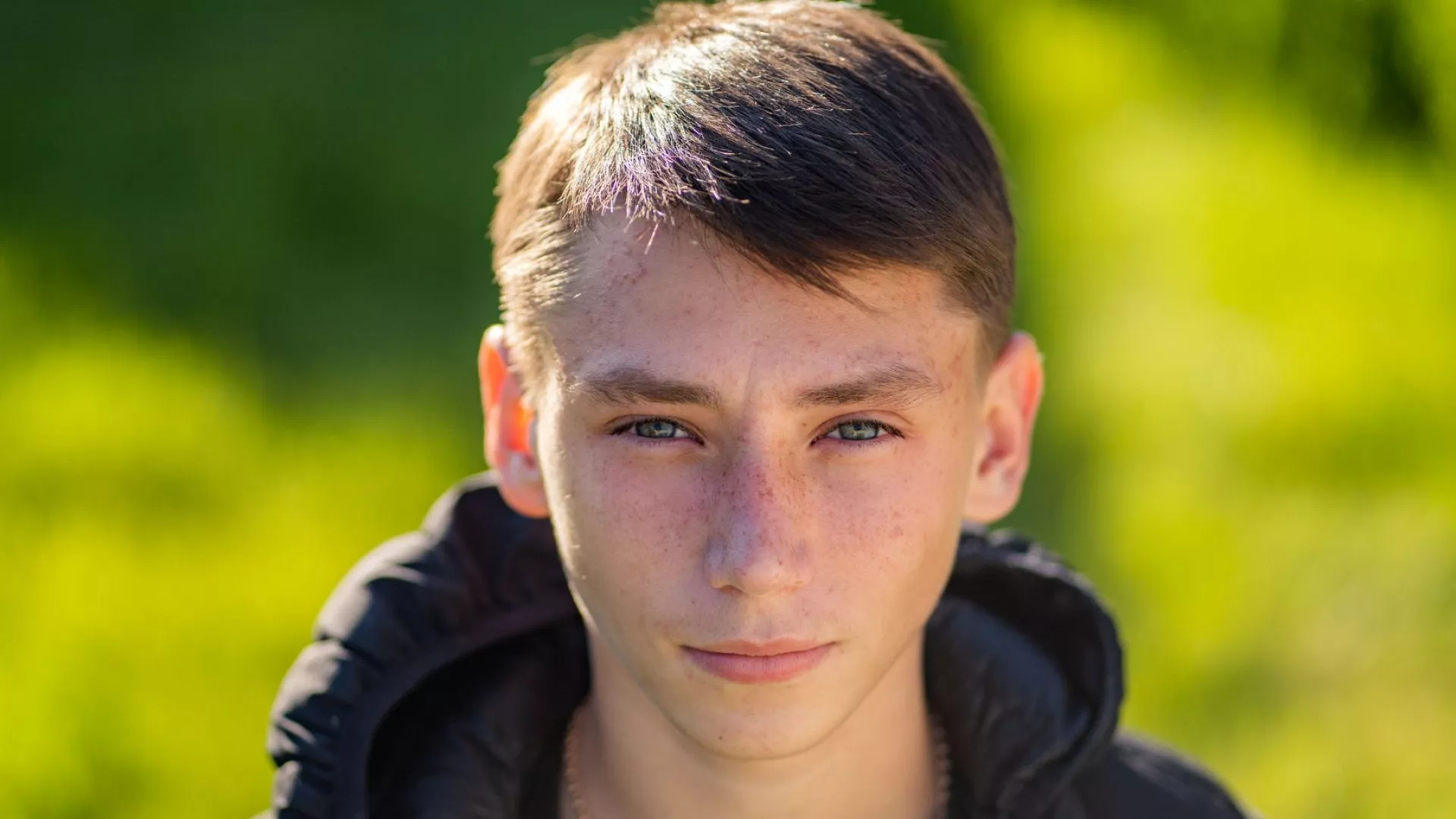
“We didn’t believe something horrible would happen. We heard bombing from time-to-time, but never that close,” 17-year-old Oleh said about growing up in Ukraine’s Hnutove, a village about 20 kilometres east of Mariupol bordering the so-called Donetsk People’s Republic.
Many forget that Russia’s war on Ukraine started in 2014, shortly afterUkraine’s Revolution of Dignity, followed by the Russian occupation and annexation of Crimea and the support for pro-Russian separatists fighting the Ukrainian military in the Donbas.
The 2017 award-winning documentary The Distant Barking of Dogs captured Russia’s war on Ukraine through the eyes of the then-10-year-old Oleh. His childhood was overshadowed by war.
Oleh was only seven when the war started, recalling occasionally going to the basement to hide from explosions and gunfire. “I was too young to understand the situation”, he recalled. Despite Russia’s war on Ukraine, Oleh had a relatively normal childhood in Hnutove, playing volleyball and football, spending time with his two cousins, and attending school like any other child.
Leaving home to seek shelter in Mariupol
When Russia started its full-scale invasion of Ukraine on 24 February 2022, Oleh couldn’t imagine what was to come. He thought it was a day like many others, but when he heard shelling close by, he got scared.
Despite Oleh’s fear, he tried to calm his younger cousins down. “They understood even less”, he remembered. “We tried to stick together,” he said, explaining they quickly realised the shelling this time was closer and more intense.
“We began to understand the seriousness of the situation, that we could die at any moment”, he added, emphasising how important staying together was for his family. “We could not live without each other and began to value each other more”, he stressed.
After Russia attacked Hnutove, the family — his aunt, grandmother, father, and two cousins — decided to leave and go to Mariupol, which they thought would be safer.
Mariupol was one of Russia’s first targets. The port city at the Sea of Azov was known as a centre for grain trade, metallurgy, and heavy engineering, including the Illich Steel and Iron Works andAzovstal. The seaside city was also seen as a “bridge to Crimea”.
In the first couple of days, Russia carpet bombed the city, and in March, residents lost access to power, running water and gas supplies.
Shortly after, Russia began its blockade and the town with a population of around 400,000 people wascut off from access to food and essentials, leading to people being forced to melt snow for water, leave their shelters to cook food outside on an open flame and endangering themselves.
Trapped in a basement for two months
When Oleh and his family arrived in the besieged city, they quickly realised they were trapped. Leaving Mariupol was impossible. Trains weren’t running, and the roads were too dangerous — one could either get killed by shelling or shot by Russian forces.
They were forced to hide in the basement for two months, completely cut off from the rest of the world. “Sometimes, we sat outside the basement to get some fresh air when there were no loud explosions”, Oleh recalled.
Besides the constant shelling, no one knew what went on in Mariupol and the rest of the country. “We were terrified of hearing the sound of planes flying and dropping bombs on us. They often flew at night. It was scary to sleep”, he added. When risking leaving the shelter, it felt like every trip outside for essentials could be their last.
“We were lucky because the owner of the Second-Hand shop opened his shop nearby and allowed us to take clothes to keep warm. That’s where we picked up some things, such as blankets, jumpers, hats and mittens”, Oleh explained.
When it came to water and food, he remembers being forced to drink water from the heating system when they ran out. “We went to a well nearby the basement, but it was often shelled, and dead bodies were on the ground”, he remembered.
Oleh and his family constantly thought about returning home: “We were counting on it very much. Every night, we fell asleep with the hope that we could go home tomorrow.”
After two months, when the situation in the besieged city felt somewhat “stabilised”, his family returned to their hometown, Hnutove.